

Qingdao Huading Industry Co., Ltd.
is your one-stop solution provider, offering a comprehensive range of plastic pallets.
Production Expertise
20+ years of production experience, possessing advanced equipment and robust production capabilities.
Customization Capability
Independent R&D Center, always able to offer customized products.
Quality Assurance
Special QC team and independent testing labs, promise the quality.
Timely Delivery
On-time Shipping and order tracking.
Global Presence
15+ years mature international business team, with offices in Europe, East Asia, and Southeast Asia, serving customers all over the world.
Trusted Partnerships
Rich experiences with Famous brands, including Porsche, Volvo, Auto-zone, SQM and so on.
-

40x48 Plastic Pallets for Storage
Size: 1200x1000x155mm . Material: HDPE/PP . Dynamic load: 1.5T . Static load: 6T . Racking load: 1T Add to Inquiry -
Colored Strong Rackable Plastic Pallets
1.Size: 1300×1100×150mm . 2.Material: HDPE . 3.Entry: 4 way . 4.Static load: 6T Add to Inquiry -
Reusable Yellow Injection Molded Plastic Pallets
Size:1250x1000x150mm . Material: HDPE/PP . Dynamic load:1.5T . Static load:6T . Racking load:1.2T . Add to Inquiry -
4 Way Industrial Durable Plastic Pallets
1. Size: 1200×1000×150mm . 2. Material: HDPE/PP . 3. Entry: 4 way . 4. Static load: 4T . 5. Dynamic Add to Inquiry -
1200 x 1200 Green Reinforced Plastic Pallets
1. Size: 1200×1200×165mm . 2. Material: HDPE . 3. Entry: 4 way . 4. Static load: 6T . 5. Dynamic Add to Inquiry -
Warehouse Transportation Storage Plastic Pallets
The injection moulding plastic pallets can be used for rack systems, and the price is cheaper. This Add to Inquiry -
Double Face Reversible Stack Plastic Pallet
1.Material:HDPE material. 2.Style:double-deck ,open deck. 3.Entry:4 ways . Add to Inquiry -
Recyclable Steel Reinforced Plastic Pallets
Size:1200x1100x170mm . Material: HDPE/PP . Dynamic load:1.5T . Static load:6T . Racking load:1T . Add to Inquiry -
Rackable Plastic Pallet 48 X 40 Black
Dimensions: 1200x1000x120mm . Style: closed deck, 9 feet . Racking Load: 1.2T . Add to Inquiry -
Heavy Duty Nestable Plastic Pallet
Enhance safety in automated storage and retrieval systems with our Heavy Duty Nestable Plastic Add to Inquiry -
Grid Deck Storage Euro Plastic Pallets
Grid Deck Storage Euro Plastic Pallets have 8pcs reinforced crisscross steel tubes in the top and Add to Inquiry -
Durable Logistics Warehouse Distribution Plastic Pallets
The dynamic load capacity of the Durable Logistics Warehouse Distribution Plastic Pallet is 2T; the Add to Inquiry




our factory


our service
Pre-Sales:
Comprehensive Expert Consultation for Product Selection
In-Depth Product Information and Specifications
Sample Availability for Evaluation
Tailored Solutions to Meet Specific Requirements
Competitive Pricing and Quotation Assistance
Prompt Response to Inquiries and Requests
After-Sales:
Detailed User Guide for Effective Product Utilization
Regular Follow-up and Guidance for Ongoing Support
On-Time Delivery of Products
Guarantee Period for Customer Satisfaction
Updates on New Products and Industry Information
7*24 After-Sales Service Availability
Certifications

What is Rackable Plastic Pallets
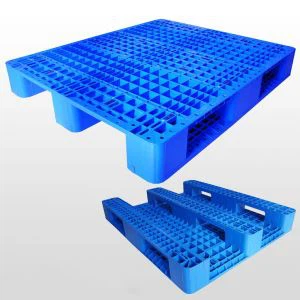
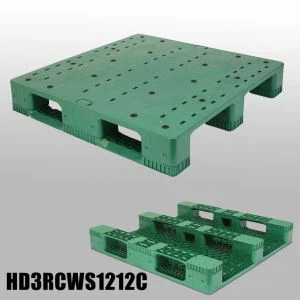
Plastic rackable pallets are made especially strong to withstand weight loads in an open rack system without decking, which consists of just front and rear beams and no intermediate support. They are typically reinforced with internal steel tubing, making them an ideal and durable solution for heavy-duty industrial applications while optimizing storage efficiency.
Benefits of Rackable Plastic Pallets
Standard Size
Follow international or industry standard specifications to ensure compatibility with various racking systems.
Heavy Duty
Can support over 1 ton of weight on the rack.
High Stability
Uniform mass distribution and built-in steel tubes ensure product safety.
Durability
High-quality plastic and reinforced construction ensure a long service life and reduce replacement and maintenance costs.
Hygienic Environment
Antibacterial, moisture-proof, chemical-resistant, and easy to clean.
Eco-Friendly
Reusable and recyclable, in line with sustainable concepts.
Material of Rackable Plastic Pallets
HDPE (High-Density Polyethylene)
Known for its robustness and resistance to moisture and chemicals, HDPE is a common choice for rackable plastic pallets, offering durability under heavy loads.
PP (Polypropylene)
Polypropylene provides a balance of strength and flexibility, with high impact resistance and tolerance for temperature variations, including high temperatures.
Reinforced Structure
Rackable plastic pallets often feature reinforced components such as steel tubes to enhance load-bearing capacity and structural integrity.
Anti-Slip Design
Some pallets feature surfaces with rubber or texturing to enhance load stability during storage and transportation, reducing the risk of accidents and product damage.
Application of Rackable Plastic Pallets
Warehouse Shelving
Rackable plastic pallets work well in warehouse racking systems to maximize vertical space, making them perfect for high-density storage.
AS/RS
To improve processing efficiency, automated storage and retrieval systems can use these pallets, which have consistent size and durability.
Distribution center
It can achieve effective logistics operations at the distribution center by optimizing space and offering dependable carrying capacity.
Production Plants
Make sure that raw materials, semi-finished goods, and completed goods are all stored in an orderly manner and move through the production facility without interruption.
Craftsmanship of Rackable Plastic Pallets
Raw Material Preparation
The main raw materials of plastic pallets are plastic particles such as polypropylene (PP) and polyethylene (HDPE).
Injection Molding
Plastic pellets are added to the injection molding machine and melted under high temperatures and pressure. The melted plastic will be injected into the pallet's mold.
Cooling and Solidification
The injected plastic cools and solidifies within the mold, forming the final shape and structure of the rackable pallet.
Pruning
After cooling, remove the pallet and trim it to remove excess plastic.
Inspection and Quality Control
Finally, the plastic pallets are inspected and quality controlled to ensure they meet design requirements and quality standards.
Maintenance Tips for Rackable Plastic Pallets
Cleaning
Use a damp cloth or a light detergent to wipe the pallet's surface to remove any dust, filth, or oil.
01
Avoid Overload
Do not exceed the rated load limit of the racking pallet to prevent damage or breaking.
02
Properly Store Goods
To reduce local loads, appropriately distribute them and refrain from excessive stacking.
03
Regular Examination
Regularly inspect the pallet's surface for cracks, deformation, or damage, and take the necessary measures.
04
Conditions for Storage
Keep plastic pallets out of the sun and rain and store them in a dry, cool place.
05
FAQ
Q: What does rackable pallet mean?
A: Specialized pallets made to endure the strains of racking systems in storage facilities are known as rackable plastic pallets. Because of their sturdy design and extra reinforcement, these pallets can hold large weights when stacked in racks.
Q: How much weight can a plastic pallet hold?
A: Heavy-duty plastic pallets typically have a static load capacity of 6000kg or more. When used in racking systems, the rack load capacity can range from 1000kg to 1500kg.
Q: What is the difference between rackable and non-rackable pallets?
A: Rackable pallets have strengthened frames for greater load-bearing capability and are specifically made to handle the demands of storage racking systems. Non-rackable pallets might not be appropriate for high-density vertical storage, because they don't have this specific reinforcing. Their structural layouts to suit various storage settings account for the majority of the differences.
Q: Are plastic pallets more expensive?
A: Because of their longer lifespan, durability, and low maintenance needs, plastic pallets eventually prove to be a more cost-effective investment than traditional wooden pallets, even though they may initially cost more. Plastic pallets' remarkable longevity and functionality might result in total supply chain savings.
Q: Are plastic pallets stronger than wood?
A: Indeed, compared to wooden pallets, plastic pallets are generally more robust. They offer a greater capacity to support loads and greater resistance to chemicals, moisture, and abrasion. Plastic pallets also maintain their structural integrity over time, which makes them a durable and reliable option for a range of industries, particularly in hygienic and demanding conditions.
Q: What are the pros and cons of plastic pallets?
A: Plastic pallets provide many advantages, including consistent sizing, industry applicability, and resistance to moisture and chemicals. Because they are lightweight and recyclable, they help the environment by saving money on transportation. Plastic pallets lessen the chance of product contamination as well. Some types, meanwhile, might not be able to withstand as much weight as their wooden equivalents and might cost more initially.
Q: How long do plastic pallets last?
A: Generally speaking, the lifespan of plastic pallets is greater than that of their wooden equivalents; it can range from 5 to 20 years, contingent upon usage, design, and material composition. Plastic pallets are an economical and environmentally friendly option for long-term usage because of their resilience to wear, weather, and chemicals.
Q: What pallets to avoid?
A: Steer clear of pallets with obvious deterioration, impaired structural integrity, or insufficient load-carrying capacity. Avoid pallets that are not up to industry requirements or that are constructed of inferior materials. Pallets that could endanger the security of goods during storage and transit must never be used.
Q: Can you double stack pallets in racking?
A: It is safe to double stack plastic pallets, ones made for racking. For the pallet to be compatible with the racking system, its unique design and load-bearing capabilities must be taken into account. In double stacking applications, always follow manufacturer instructions and industry requirements to ensure stability and safety.
Q: Do plastic pallets rot?
A: Pallets made of plastic do not decay. Pallets made of plastic resist rot, mold, and decay better than those made of wood. They are appropriate for a variety of sectors due to their robust and non-absorbent nature, which offers a hygienic and long-lasting solution for material handling and storage requirements.
Q: What size is a heavy-duty plastic pallet?
A: There are many sizes of heavy-duty plastic pallets available to cater to the different demands of the organization. Plastic pallets come in standard sizes, like 1200 x 1000 mm, but bespoke sizes can also be offered in response to particular needs.
Q: Are plastic pallets a fire hazard?
A: No, most people don't think that plastic pallets pose a fire risk. Plastic pallets are non-combustible and have a great fire resistance compared to timber pallets. In settings like warehouses and storage facilities where fire safety is an issue, their composition and design make them a safer option.
Q: What does edge rackable mean?
A: Edge Rack refers to a storage system where rackable plastic pallets are supported by the edges on both sides, optimizing space utilization and facilitating efficient loading and unloading processes.
Q: Is pallet racking safe?
A: Yes, pallet racking is safe when proper guidelines and load capacity specifications are followed. Rackable plastic pallets are designed to withstand the stresses of racking systems. It is crucial to adhere to industry standards, conduct regular inspections, and ensure proper load distribution to maintain a safe and efficient storage environment.
Q: How can you tell if a pallet is good?
A: To ascertain the quality of rackable plastic pallets, assess their load capacity, structural design, and compatibility with racking systems. Look for features such as reinforced corners, optimal weight distribution, and compliance with industry standards. Simultaneously, consider the material's durability and resistance to environmental factors for long-term reliability.
Q: Do plastic pallets need to be fumigated?
A: No, fumigation is not necessary for plastic pallets. Plastic pallets are naturally resistant to fungi, insects, and vermin, unlike wooden pallets. They provide a hygienic and legal alternative to fumigation for international shipment and storage without the added expense and regulatory considerations.
Q: Why are blue pallets better?
A: Pallets in blue provide excellent visibility and simple discrimination in large storage facilities. This facilitates rapid identification while reducing errors and saving time. Beyond just being useful, the industry has made blue the standard, which makes purchasing and replacing pallets easier.
Q: Where can I use plastic pallets?
A: Plastic pallets are adaptable and appropriate for a range of sectors, such as manufacturing, warehousing, and logistics. They perform particularly well in applications involving automated systems, high-density storage, and places where cleanliness and hygiene are essential. Because of their strength and capacity to withstand moisture, they are perfect for handling, storing, and shipping in a variety of supply chain applications.
Q: Are plastic pallets heavier than wood?
A: No, in general, plastic pallets weigh less than wood pallets. Plastic pallets are made from lightweight, long-lasting materials with a good strength-to-weight ratio. Compared to their wooden equivalents, this feature makes handling simpler, saves money on transportation, and improves operational efficiency.
Q: What type of plastic are plastic pallets made of?
A: Plastic pallets are commonly made from HDPE (High-Density Polyethylene) or PP (Polypropylene), available in both virgin and recycled forms. HDPE and PP offer excellent durability, chemical resistance, and structural integrity, making them suitable materials for manufacturing rackable plastic pallets.
Feel free to buy rackable plastic pallets here. As a professional rackable plastic pallets manufacturer as well as one of China's leading plastic pallets suppliers, we'll offer you the highest quality products with the lowest price.
