


our factory
Qingdao Huading Industry Co., Ltd. is a leading manufacturer of logistics and warehousing products in China, providing not only high-quality plastic products but also professional customized designs and sustainable solutions.
We have decades of production experience and more than 80 injection molding machines and 18 blow molding machines. With an annual output of more than 3 million plastic pallets, we provide you with reliable production capacity.
Independent R&D center
With more than 200 patented products, we provide clients with customized solutions.
Quality Assurance
Equipped with a professional quality control team, the products have obtained multiple certifications.
Competitive Prices
Let you get high-quality products at the lowest prices.
Global Logistics
Work with first-tier freight forwarders to ensure on-time shipping and order tracking.
Our Service
Email: operator02@huading-industry.com
Professional Consulting
1
>>
Sample Provision
2
>>
On-time Delivery
3
>>
Quality Guarantee Period
4
>>
Continuous After-sales Support
5
>>
7x24 Hours Online Service
6
-

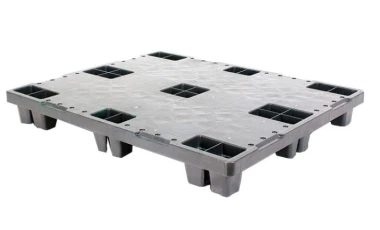
Black Lightweight HDPE Plastic Pallets
Size: 1200x1000x140mm. Material: HDPE/PP. Dynamic load: 0.6T. Static load: 1.2T. Add to Inquiry -
1200 x 1000 Lightweight Nestable Plastic Pallets
- Dimensions: 1200x1000x140mm . - Material: HDPE . - Load Capacity: 1T . - Style: Open Deck, 9 feet Add to Inquiry -
Cheap Durable Stroage Plastic Pallet
1. Material:HDPE material. 2.Style:9 feet,closed deck . 3.Entry:4 ways. Add to Inquiry -
Recycled Black HDPE Plastic Pallets
1.Size:1100×1100×150mm . 2.Style:Full perimeters, open deck . 3.Entry:4 ways . Add to Inquiry -
Recycled Nine Feet Plastic Pallets
Recycled material nine feet plastic pallet description: Recycled material nine feet plastic pallet Add to Inquiry -
Commercial Regenerated Retail Plastic Shipping Pallet
1.Unit Weight:8.5±0.5kg. 2.Material:HDPE. 3.Usage temperature:-25℃~40℃. 4.Colour:According to Add to Inquiry -
Nine Feet Nestable Plastic Pallet
Materials:New HDPE Plastic;. Color:Different color can be available;. Add to Inquiry -
Reusable Industrial Plastic Pallets
1.Material:HDPE. 2.Style:9 feet,closed deck . 3.Entry:4 Add to Inquiry -
Heavy Duty Warehouse Export Plastic Pallet
1.Materials: HDPE or PPinnovate. 2.Built-in steel tube: dynamic load 1.5 tons, static load 6 tons. Add to Inquiry -
Light Duty Spill Plastic Pallet
1.Material:Plastic, HDPE. 2.Type:Euro Pallet. 3.Entry Type:4-Way. 4.Feature:without steel tubes. Add to Inquiry -
Cheap Recycled Display Molded Plastic Pallets
Quick DetailsPlace of Origin:Shandong, ChinaBrand Name:INNOVATEModel Number:HD3RGWS1111AType:Euro Add to Inquiry -
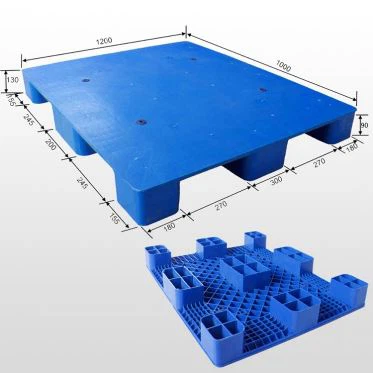
9 Feet Plastic Pallet Flat Top
1.Material:HDPE material . 2.Style:9 feet,closed deck . Add to Inquiry




Certifications

What is Plastic Shipping Pallet
Plastic Shipping Pallets are also often called export pallets, or one-way pallets. These plastic pallets are often single-use, but they are cheap. They aim to transport your products at the lowest cost, making them very popular for international shipping.
Lightweight
Plastic shipping pallet adopts a lightweight structure, easy to handle, reducing transportation costs and carbon emissions.
Nestable
Export pallets are usually designed as nestable plastic pallets, which can greatly save storage and transportation space.
Low Price
Generally single-use, these pallets are relatively low-priced and cost-effective.
Hygiene
Compared with wooden pallets, plastic pallets are moisture-proof, corrosion-resistant, pest-resistant, and less likely to breed mold and bacteria.
Compliance
Plastic export pallets are fumigation-free and avoid regulatory issues related to wooden pallets, making international transportation smoother.
Eco-friendly
Plastic shipping pallet is made of recycled plastic, reducing energy consumption and environmental pollution.
Application of Plastic Shipping Pallet
One-time transportation
The supplier uses plastic shipping pallets to deliver the goods to the destination. The pallets are then typically not returned to the supplier but are disposed of or recycled.
Exporting Goods
In international trade, it may not be cost-effective to ship pallets back to their origin. Therefore, one-way pallets are a common choice when exporting goods.
Temporary storage
Plastic shipping pallets can be used for temporary storage in warehouses or distribution centers. They can be used to store goods until they are ready for transport or transfer to another location.
Fast supply chain
plastic shipping pallets can provide faster turnaround time in the supply chain. There is no need to wait for the pallet to return, and goods can be transported to their destination faster.
Material of Plastic Shipping Pallet
Plastic shipping pallets are typically made from plastic materials such as polypropylene or polyethylene. These materials are strong and durable enough for use in freight and logistics. One-way pallets are typically intended for one-time or short-term use and are therefore made from relatively cheap recycled plastic to keep costs down.

HDPE
HDPE pallets are usually recommended for use in areas or environments with relatively low temperatures, such as Russia, Europe, the United States, and Canada; usage scenarios include medicine, cold storage, etc.
characteristic:
• Flexible
• Translucent/waxy
• Good low-temperature toughness (to -60℃)
• Easy to handle by most methods
• Low cost
• Good chemical resistance.
PP
PP pallets are usually recommended for use in relatively high-temperature areas or environments, such as Southeast Asia, Central America, and Central Africa.
characteristic:
• Excellent mechanical properties, higher strength and elasticity than HDPE, and resistance to bending
• Heat resistance, stable to chemical reagents (except concentrated sulfuric acid)
• Polypropylene has excellent high-frequency insulation properties
• Barely absorbs water
Craftsmanship of Plastic Shipping Pallet
Plastic shipping pallet usually adopts the injection molding process and is formed in one piece.
01
Raw material melting and injection
The plastic raw material is melted through heating and pressure and injected into the mold.
02
Cooling and solidification
The plastic is cooled and solidified in the mold to shape the product.
03
Demolding and quality inspection
Take out the formed pallet, remove the remaining materials, and conduct quality inspections to ensure that the product meets the specified standards.

Plastic Shipping Pallet Usage Precautions
Avoid overloading
Use the pallet according to its load capacity and do not overload it. Overloading may cause the pallet to deform or crack, affecting transportation safety.
Stack items correctly
Ensure that goods are placed stably to avoid imbalance or excessive stacking, which may cause plastic shipping pallets to tilt or collapse.
Prevent breakage and scratches
When using pallets, avoid scratching or puncturing the pallet with sharp objects, which may reduce its load-bearing capacity and increase the risk of damage.
Keep them clean
Export pallets should be kept clean before and after use, especially when transporting sensitive items. Cleaning prevents the growth of bacteria and ensures the safety of your items.
Correct storage and disposal
After use, the one-way pallets can be sorted and recycled or disposed of properly to avoid excessive burden on the environment.
Avoid exposure to high temperatures
One-way plastic pallets have low resistance to high temperatures. Avoid exposure to high temperatures during storage and use to avoid deformation or damage.
FAQ
Q: What are export pallets?
A: Export pallets are lightweight, low-cost pallets designed for one-way shipping. These export pallets are lightweight to minimize shipping weight. They are often designed as nestable plastic pallets, saving storage and shipping space. Export pallets are made of recycled plastic and are more environmentally friendly.
Q: What size is an export pallet?
A: Export pallet dimensions may vary depending on requirements and standards. The commonly used size for export pallets is 1200 mm x 1000 mm, which is the international standard size established by ISO. In addition, other common export pallet sizes include 1200mm x 800mm (Euro pallet), 1100mm x 1100mm, and 1165mm x 1165mm, etc.
Q: Can plastic pallets be used for export?
A: Plastic pallets can be used for export. Because of their durability, moisture resistance, and compliance with international shipping regulations, plastic pallets are usually preferred for international shipping. Additionally, plastic pallets are lighter than wooden pallets, which can save on shipping costs.
Q: Do export pallets have to be heat-treated?
A: If you are using plastic pallets for international shipping, they do not need to be heat-treated. Because plastic pallets pose no risk of harboring pests or pathogens.
In the case of wooden pallets, heat treatment is required to meet international standards for phytosanitary measures and eliminate the spread of pests and diseases.
In the case of wooden pallets, heat treatment is required to meet international standards for phytosanitary measures and eliminate the spread of pests and diseases.
Q: What is the difference between a euro pallet and a standard pallet?
A: The main difference between standard pallets and Euro pallets is their size. The standardized dimensions of Euro pallets are 1200 mm x 800 mm (47.2 inches x 31.5 inches). International standard pallets typically measure 1200mm x 1000mm (47.2 inches x 39.4 inches). Standard pallet sizes vary by country and region.
Q: What does shipping pallets mean?
A: Shipping pallets are flat platforms used to transport goods, providing stability and support to the goods. It has export pallets for single-use transportation and reusable pallets for heavy loads to meet different uses and needs.
Q: What do pallets mean in trucking?
A: Pallets are platforms used for stacking and packaging goods for transportation. Pallets can be made of wood, plastic, or other materials and can be easily moved with a forklift. Pallets can be loaded with goods and placed on trucks for transportation, helping to improve loading and unloading efficiency.
Q: How much can you ship on a pallet?
A: Pallets come in many types and sizes and are divided into heavy, medium, and light loads. The static load of lightweight plastic pallets is less than or equal to 2 tons, the static load of medium-duty plastic pallets is 2-4 tons, and the static load of heavy-duty plastic pallets is 4-6 tons.
Q: What is a one-way pallet?
A: One-way pallets, also known as single-use pallets or disposable pallets, are generally less durable than reusable pallets. One-way pallets are typically used when one-way cost-effectiveness and convenience take precedence over long-term sustainability and reusability. After use, they are often thrown away or recycled rather than returned for reuse.
Q: How much does a one-way pallet weigh?
A: One-way pallets, usually made from recycled plastic, are lightweight. The general unit weight is several kilograms, which also varies according to size and structure.
Q: How long does a plastic pallet last?
A: The service life of plastic pallets is affected by many factors, such as the quality of the material, conditions of use, and handling. On average, plastic pallets can last 10 to 15 years, or even longer, if properly cared for and maintained.
Q: Do plastic pallets rot?
A: Plastic pallets are typically made from durable materials like polyethylene or polypropylene that resist rot and insect damage. When needed, they can be washed to remove dirt or debris and maintain a hygienic environment. Most stored chemicals will not cause harm or damage to plastic materials.
Q: What color are plastic pallets?
A: Plastic pallets are available in a variety of colors, such as blue, black, gray, green, red, yellow, white, etc. When purchasing plastic pallets, you can tell the supplier your plastic pallet color requirements.
Q: What is the difference between US pallets and euro pallets?
A: The main difference between the two is their size. The standard dimensions of a US pallet are 48 inches (121.92 cm) long and 40 inches (101.6 cm) wide. This size is commonly used in North America.
The standard dimensions of a Europallet are 1200 mm (47.2 inches) long and 800 mm (31.5 inches) wide. This size is commonly used in Europe and many other parts of the world.
The standard dimensions of a Europallet are 1200 mm (47.2 inches) long and 800 mm (31.5 inches) wide. This size is commonly used in Europe and many other parts of the world.
Q: What size is a Euro export pallet?
A: Euro export pallets usually come in two sizes:
1200mm x 800mm, suitable for continental Europe, Germany, and France.
1200mm x 1000mm, suitable for the UK, Germany, Netherlands, and Finland.
1200mm x 800mm, suitable for continental Europe, Germany, and France.
1200mm x 1000mm, suitable for the UK, Germany, Netherlands, and Finland.
Q: Are shipping pallets reused?
A: Whether shipping pallets can be reused depends on the nature and purpose of the pallet. If it is a lightweight one-way pallet used for international shipping, it is not reusable. For high-quality plastic pallets with larger loads or participating in pallet sharing programs, they are generally reusable.
Q: Can you use plastic pallets for international shipping?
A: Plastic pallets can be used for international shipping and are generally preferred over wooden pallets.
Plastic pallets are more durable, are resistant to moisture, corrosion, and pests, and are easier to clean and disinfect. Because of pests and diseases, some countries have strict regulations on the use of wooden pallets. Plastic pallets avoid regulatory issues, making them the first choice for international shipping.
Plastic pallets are more durable, are resistant to moisture, corrosion, and pests, and are easier to clean and disinfect. Because of pests and diseases, some countries have strict regulations on the use of wooden pallets. Plastic pallets avoid regulatory issues, making them the first choice for international shipping.
Q: What are the international pallet standards?
A: The International Organization for Standardization (ISO) has established six pallet sizes: 1200×800mm, 1200×1000mm, 1219×1016mm, 1165×1165mm, 1100×1100mm, and 1067×1067mm.
Specifically, European pallets mainly use 1210 specification pallets (1200mm×1000mm) and 1208 pallets (1200mm×800mm). Australia mainly uses 1165×1165mm pallets. The main specifications of Japanese and Korean pallets are 1111 pallets (1100mm×1100mm), and Southeast Asian countries mainly adopt Japanese and Korean standards. The United States mainly uses 48-inch × 40-inch pallets, and 1210 pallets are also often used. China mainly uses 1200mm × 1000mm pallets, and the standard also recommends the use of 1111 pallets.
Specifically, European pallets mainly use 1210 specification pallets (1200mm×1000mm) and 1208 pallets (1200mm×800mm). Australia mainly uses 1165×1165mm pallets. The main specifications of Japanese and Korean pallets are 1111 pallets (1100mm×1100mm), and Southeast Asian countries mainly adopt Japanese and Korean standards. The United States mainly uses 48-inch × 40-inch pallets, and 1210 pallets are also often used. China mainly uses 1200mm × 1000mm pallets, and the standard also recommends the use of 1111 pallets.
Q: Are wood or plastic pallets cheaper?
A: Generally speaking, plastic pallets cost more than wooden pallets. But plastic pallets are more economical in the long term because they are more durable, less likely to wear out or rot, and can be cleaned and reused more easily. Plastic pallets also reduce the risk of damage to goods and reduce additional costs.
Q: Why use plastic pallets?
A: Reasons for using plastic pallets include high durability, lightweight, easy to clean, resistant to moisture, insect-resistant, reusable, compliant with food safety standards, customizable, environmentally friendly, etc.
Feel free to buy plastic shipping pallet here. As a professional plastic shipping pallet manufacturer as well as one of China's leading plastic pallets suppliers, we'll offer you the highest quality products with the lowest price.
